Yoga and Pilates: What They Actually Do for Fitness
More than stretching with music
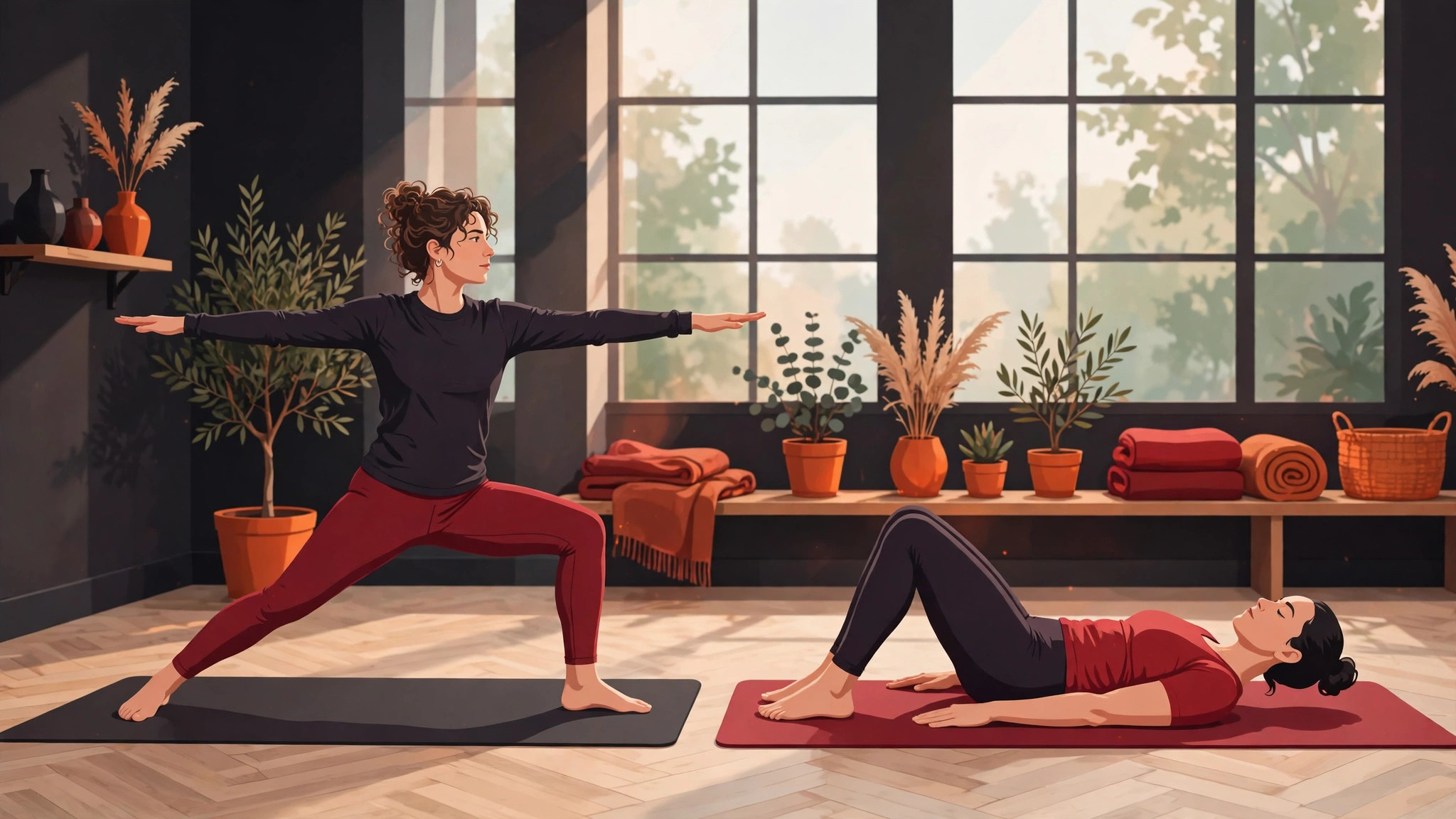
Yoga ranges from restorative sessions near 2 METs to power styles around 4, and Pilates sits near 3. Those numbers undersell what the practices train: strength at long muscle lengths, single leg balance, spinal control and breathing under mild stress. Pilates in particular was built as rehabilitation, and its core work remains a staple of back pain programmes. Judged purely as calorie burn they are modest; judged as movement quality training they are excellent. Breath is the thread through both. Yoga links movement to deliberate breathing patterns, and Pilates was built around exhaling through effort. This trains something gym work rarely touches: the ability to stay calm and organised under mild physical stress. Athletes who cross train in either often report the transfer as better breathing in their main sport, which is a performance skill hiding in a wellness class.
The benefits with evidence behind them
Trials link regular yoga with improved flexibility, balance and modest strength gains, plus reductions in perceived stress and some measures of back pain. Pilates shows similar results for core endurance and posture related pain. Neither replaces progressive resistance training for muscle and bone, nor vigorous cardio for VO2 max, and honest teachers say so. They are complements with their own territory, not substitutes with better branding. For desk bodies the value is specific. Hours of sitting shorten hip flexors, stiffen the thoracic spine and switch off deep trunk muscles; both practices address precisely that list, patiently and without load. Ten to twenty minutes of targeted work can undo the day's posture better than an hour of random stretching, because the drills are sequenced by people who thought hard about the order.
Finding your place in them
Two sessions a week is enough to feel the difference in how you move and carry yourself, and the practices pair well with lifting days because their cost is mostly not the kind that competes. Beginners should choose beginner labelled classes without embarrassment; the advanced poses are destinations, not entry requirements. The activity calculator lists both at their measured MET values for your planning. Start where you are, visibly. Every class contains people folding half as far as their neighbour, and the practice explicitly does not care. Props, chairs and modified ranges are the method, not a consolation. The measure is control and breath at your edge, and that edge moves outward at its own unhurried pace.
Put it into numbers
The free calculator that goes with this guide:
Open the activity calories calculator