Sweat Rate and Hydration: Measure Yours Once, Use It Always
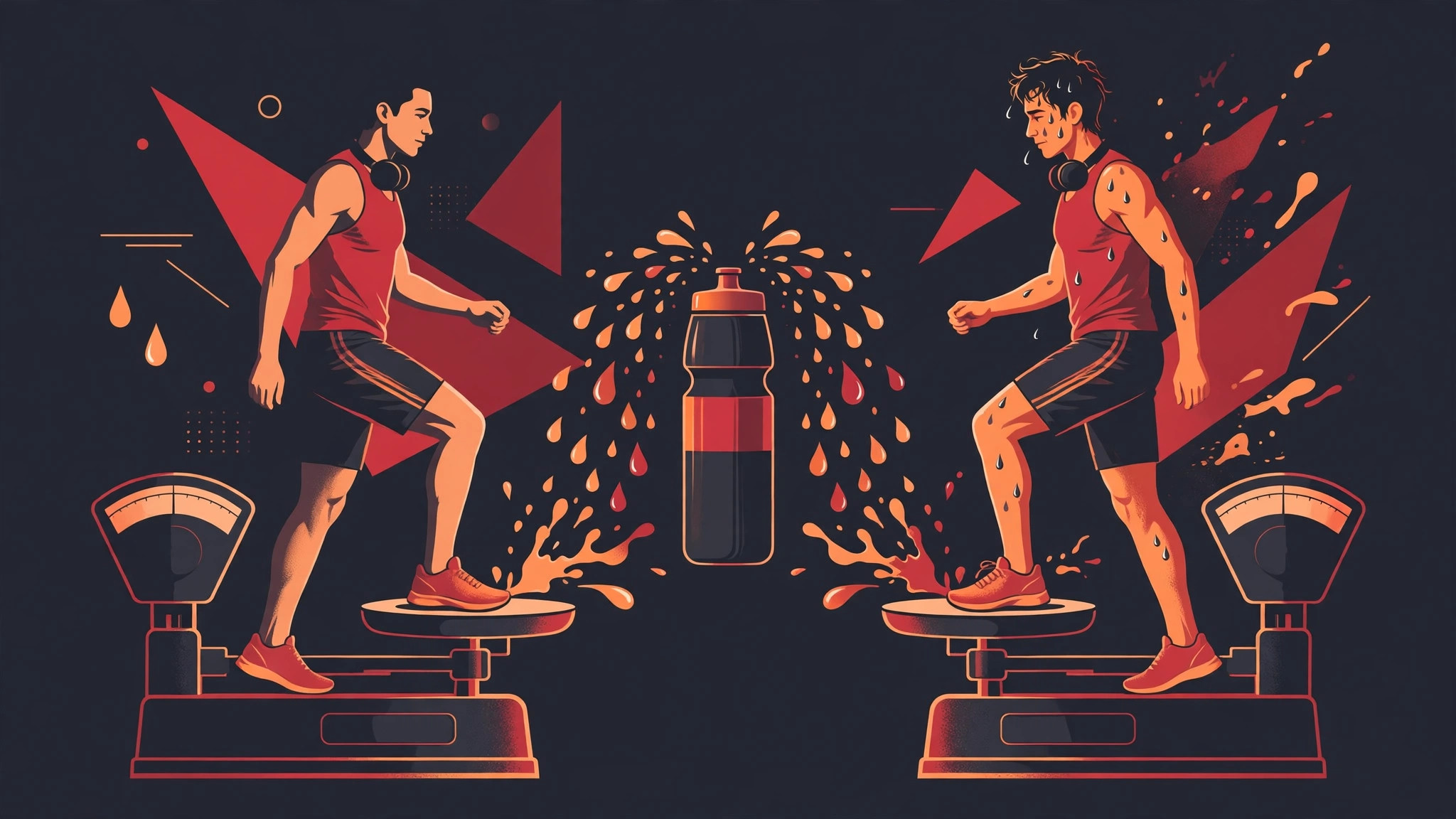
Weigh, train, weigh again
Sweat rate is personal, variable and measurable in one session. Weigh yourself dry and near naked, train for a timed hour without eating, note anything you drink, then weigh again the same way. Each kilogram lost is about a litre of sweat, after adjusting for what you drank. Rates range from under half a litre an hour in a cool gym to two litres or more in summer endurance work, which is why generic advice to drink a set amount fits almost nobody. Conditions change the rate more than fitness does. Heat, humidity, altitude, clothing and sun exposure can double it between two sessions of identical work. Measure your rate in the conditions you actually race or train in, and re-measure when the season turns. A single spring measurement applied to an August marathon is a plan built on the wrong weather.
Why you must drink back more than you lost
After exercise you keep sweating and producing urine, so replacing exactly the loss leaves you short. Sports medicine guidance settles on about 150 percent of the deficit, taken over the following hours with food or electrolytes. Sodium is the quiet hero: it holds fluid in the body instead of letting it pass straight through. Our hydration calculator turns a weigh in difference into a replacement target and a per hour sweat rate. Sodium leaves with the sweat, at rates that vary hugely between people; the white salt crust on kit after long sessions is the visible signature of a salty sweater. Heavy or salty sweaters need deliberate sodium in recovery drinks and food, or the replaced water will not stay replaced. Cramping has many causes, but chronic under replacement of fluid and salt is among the fixable ones.
The cost of getting it wrong
Losing more than about 2 percent of body weight during exercise reliably degrades performance and raises heart rate and perceived effort. Beyond that, heat illness becomes a real risk in warm conditions. The opposite error, drinking far beyond losses during long events, dilutes blood sodium and is dangerous in its own way. A measured sweat rate replaces both gambles with a plan. Build the habit around the session: drink before, sip to a plan during long work, and weigh in occasionally to audit the plan rather than daily. Hydration done well is invisible. You finish sessions with stable energy, recover normally, and never think about it, which is precisely the state the measuring was for.