Strength vs Cardio: You Need Both, in the Right Order
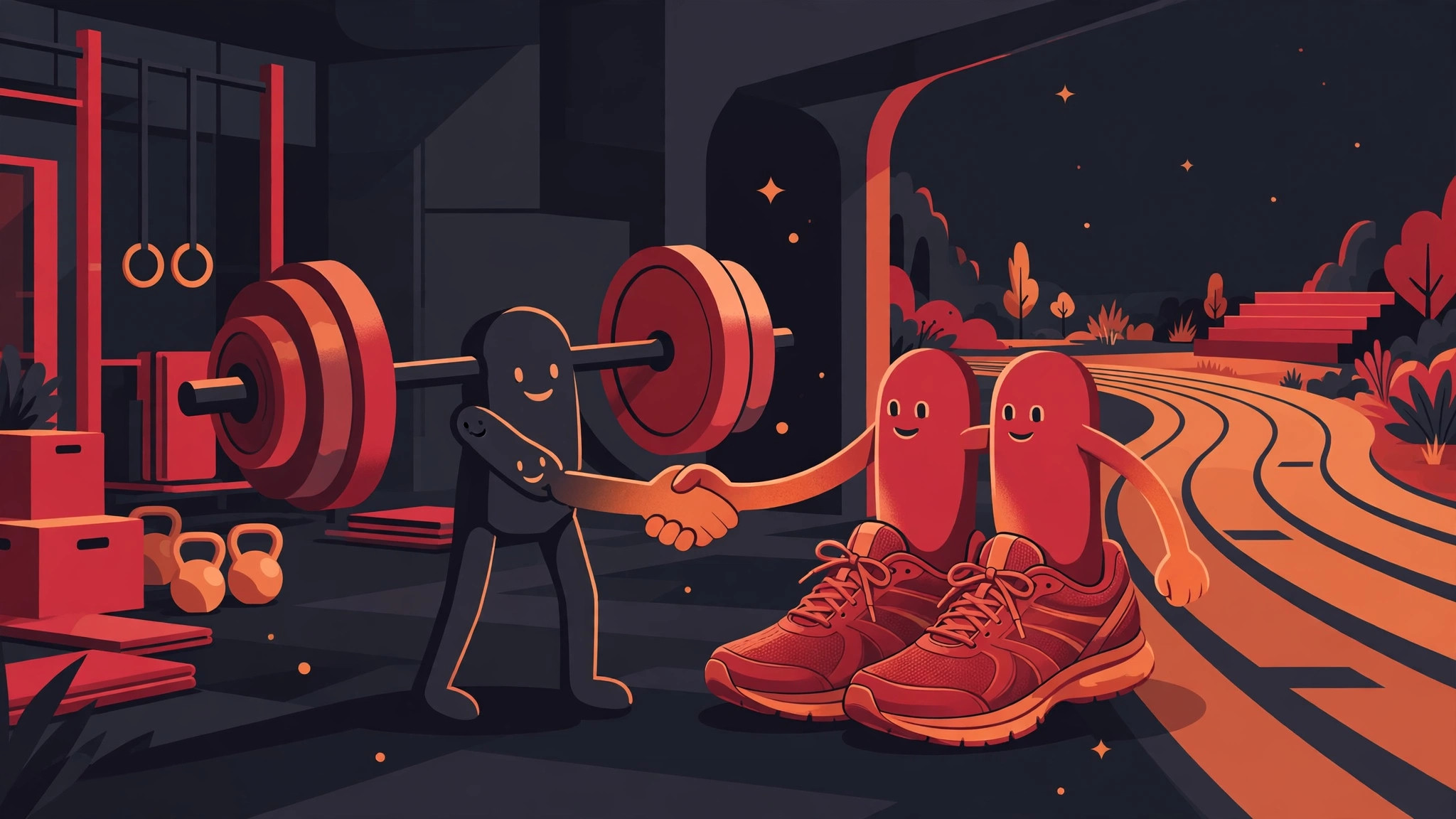
Different tools, different jobs
Strength training builds muscle, bone density, tendon strength and the ability to produce force; nothing else does these as well. Cardio builds the heart, lungs, blood vessels and metabolic flexibility; nothing else does these as well either. Health guidelines ask for both because the benefits barely overlap. The argument between camps is mostly a scheduling problem dressed as a philosophy problem. The order within a day matters at the margins. When both must share a session, do the priority quality first while fresh: strength before cardio for lifters, quality running before lifting for runners. Endurance work first blunts force production for hours; heavy lifting first mostly costs the cardio session some freshness, which easy work tolerates well. Margins matter only when both ambitions are serious.
The interference effect, in proportion
Endurance work can blunt strength and power gains when both are trained hard, especially running at high volume close to leg sessions. For most people training three to five hours a week in total, the effect is small and manageable: keep hard cardio and heavy legs on different days or separated by six plus hours, fuel both properly, and prefer cycling when legs are a priority, since it interferes less than running. Fuel is the usual hidden variable. Combined training raises energy expenditure enough that yesterday's maintenance becomes today's deficit, and an accidental deficit blunts both adaptations while feeling like a training problem. If strength and endurance stall together, eat before you reprogramme. Our TDEE calculator, set to your true combined activity level, usually finds the missing calories.
Programme for your actual goal
A lifter who wants some fitness needs two easy cardio sessions, not a marathon plan. A runner who wants durability needs two strength sessions, not a powerlifting meet prep. Let the main goal take the hard slots and the fresh days, and let the supporting work be genuinely supportive. Your TDEE will rise with the combined load; eat like it, or the interference you feel will really be under fuelling. The lifespan argument settles the debate for most readers. Muscle mass and strength predict independence in old age; VO2 max predicts survival itself with uncomfortable strength. Training only one is insuring half the house. Two sessions of each, held for years, beat five of one held for a season, every time the long data is consulted. Programmes change; the partnership does not, at any age or level.