Hydration Myths: Thirst, Eight Glasses and Other Stories
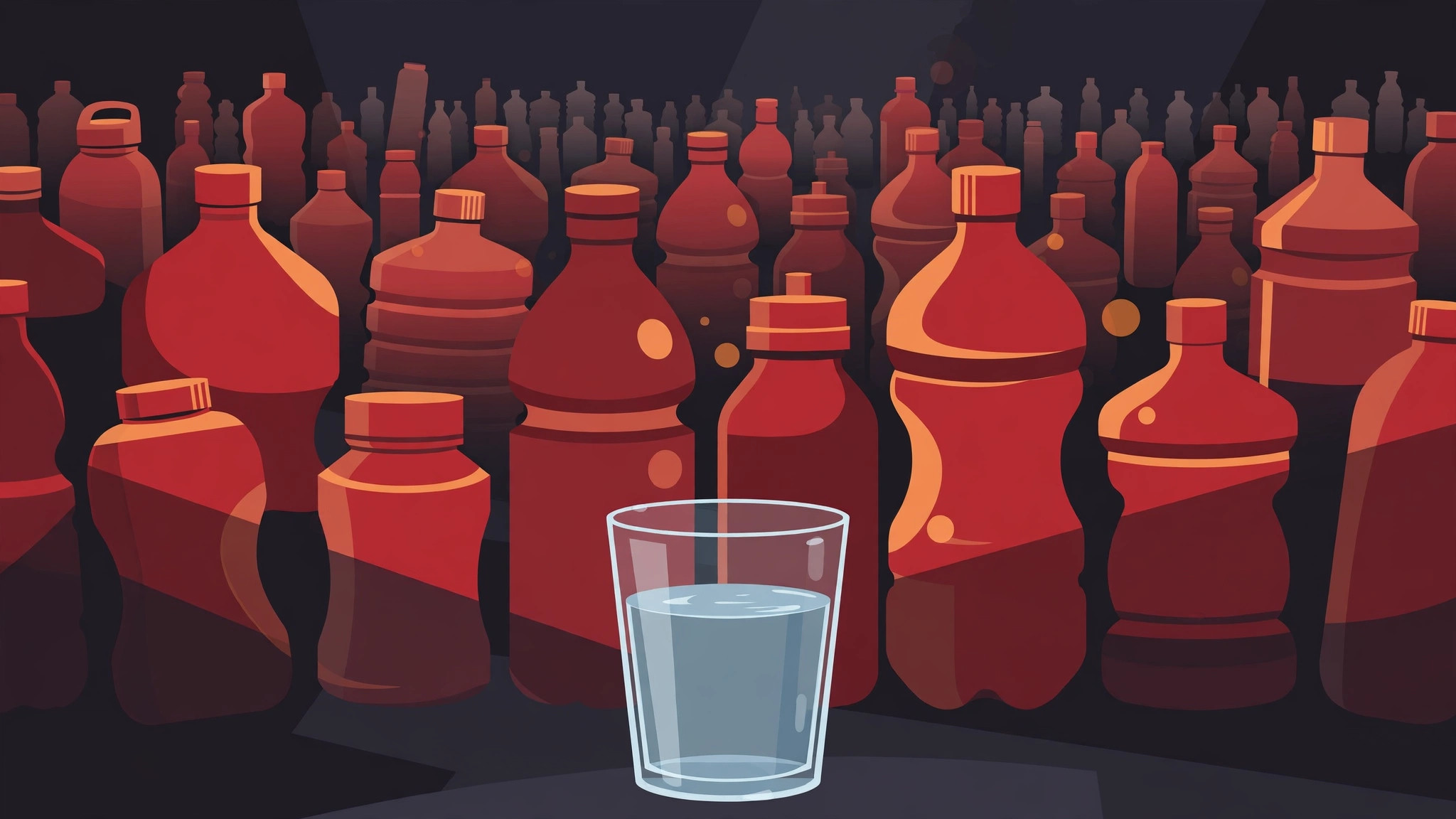
The eight glasses myth
The advice to drink eight glasses of water a day has no solid experimental origin; it appears to be a decades old recommendation misread and then repeated into law. Your total water need is real but arrives from all food and drink, and thirst in healthy adults is a well tuned signal for everyday life. Forcing water far beyond thirst across a normal day adds bathroom trips, not health, and in long endurance events, drinking far beyond losses has caused dangerous dilution of blood sodium. Coffee and tea count. The mild diuretic effect of caffeine is outweighed by the water in the cup for habitual drinkers, a finding that surprises people raised on the myth that coffee dehydrates. Milk, juice and even soft drinks hydrate too, whatever their other nutritional profiles. The body's accounting is simpler than the folklore: fluids in, from nearly everything you eat and drink, against fluids out.
Thirst is not too late
The claim that thirst means you are already dangerously dehydrated overstates a small lag into a crisis. Mild thirst arrives at roughly 1 percent body mass loss, well within the range the body handles routinely. Where drinking to a plan genuinely matters is prolonged hard exercise in heat, where losses outrun habit, and for older adults whose thirst signal dulls. That is why measuring your sweat rate beats obeying slogans: it replaces folklore with your number. Older adults and children sit at the edges of the thirst rule. Ageing blunts thirst sensation, so scheduled drinking around exercise and hot weather is sensible insurance after 65. Children overheat faster and forget to drink when playing. For healthy adults between those edges, thirst plus meals plus common sense has carried the species a long way without an app.
Practical rules that hold up
Drink to thirst day to day. Start long sessions hydrated, use your measured sweat rate to plan intake during them, and replace about 150 percent of losses afterwards with food and fluid. Urine colour is a fair guide: pale straw is the target, not permanent clear. Our hydration calculator turns one honest weigh in into your personal figures. Carry the practical summary: pale urine, steady energy, a plan for long hot sessions, and scepticism toward any rule that sells bottles. Hydration is a solved problem for most people most of the time, and the remaining cases, endurance events, heat waves, illness, are solved by measurement, not by drinking maximally every day.