How to Choose Running Shoes: Fit First, Always
Fit is the feature that matters
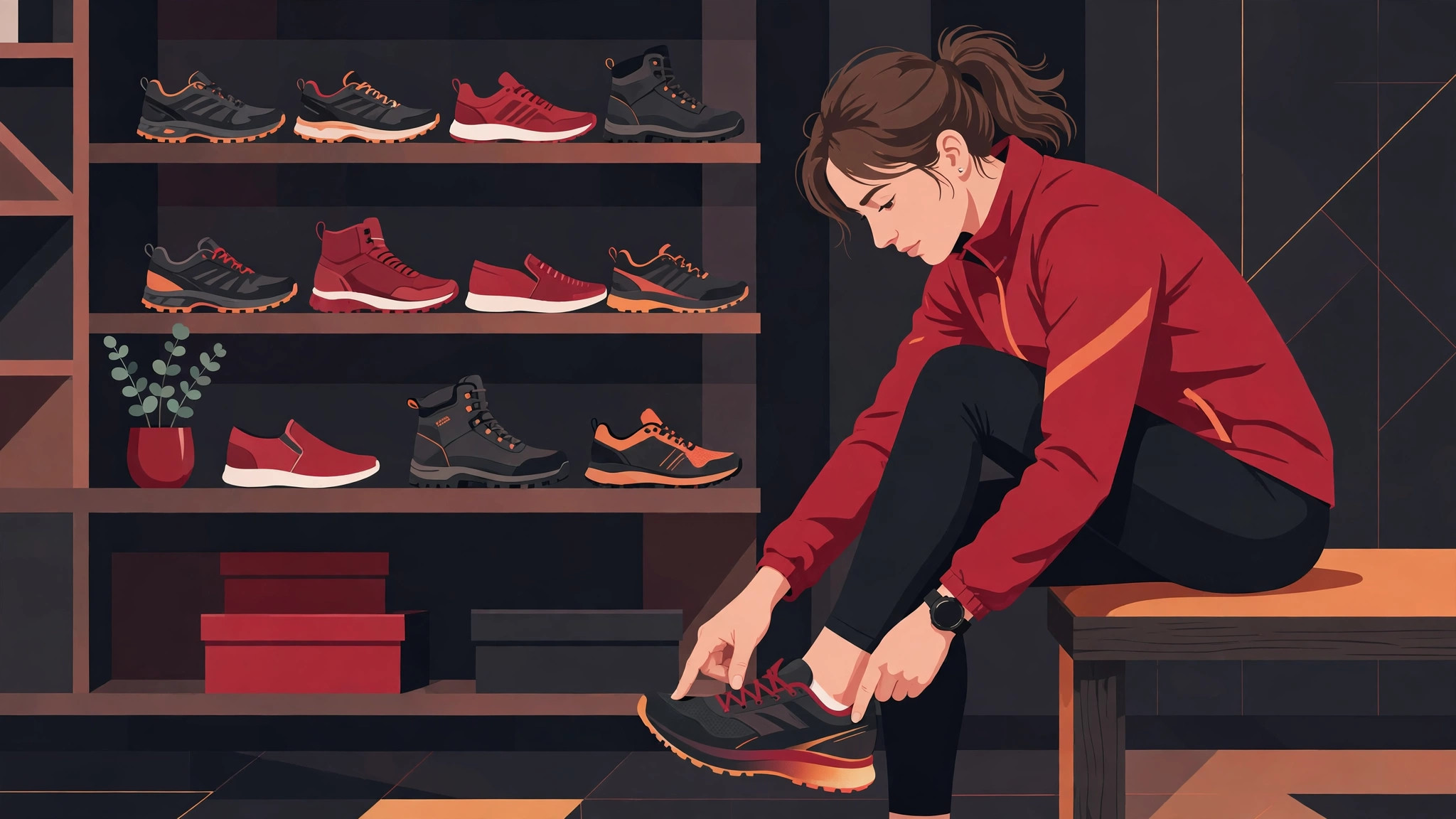
A running shoe should disappear on your foot. Leave a thumb's width beyond the longest toe, because feet swell and slide forward over distance. The midfoot should feel held, not squeezed, and the heel should not lift. Width matters more than brand: many runners wear shoes a width too narrow for years and blame their feet. Shop late in the day, in running socks, and jog in the store; a shoe that needs breaking in is the wrong shoe. Ignore the wet footprint tests and pronation labels that shoe marketing built empires on. Large trials have repeatedly failed to show that assigning shoes by arch type prevents injury, while comfort based selection performs at least as well. Your nervous system is a good judge: a shoe that feels right at a jog usually is right, because comfort reflects how the shoe matches your personal mechanics.
Drop, cushion and categories
Heel to toe drop ranges from zero to about 12 mm. Lower drops load calves and Achilles more; higher drops shift work toward the knees. Neither is universally better; match the shoe to your history, and change drop gradually. Maximal cushion suits high mileage comfort, lighter racers suit speed days, and trail shoes earn their lugs only off road. Stability features help some runners and annoy others; comfort remains the best researched guide. Racing shoes with carbon plates are real technology with real effects, a few percent of economy for many runners, and real costs: price, durability measured in hundreds rather than thousands of kilometres, and aggressive geometry that some calves hate. They are a race day tool for runners with the base to use them, not a training foundation, and never a substitute for the training itself.
Retirement and rotation
Midsoles die before uppers do, typically between 500 and 800 kilometres, announced by new aches, a compressed, wrinkled midsole and a shoe that leans. Log shoe mileage alongside your steps and distance. Rotating two pairs spreads wear, lets foam recover between runs, and studies link rotation with lower injury rates, possibly because tissues meet slightly varied stresses. Keep the receipt and the box for a week. Most good retailers accept returns from indoor treadmill trials. Run in them at home, on the treadmill, up and down stairs. Shoes are the single piece of running equipment that touches every step; an hour spent choosing them well is repaid across five hundred kilometres.