Fat Loss vs Weight Loss: Not the Same Project
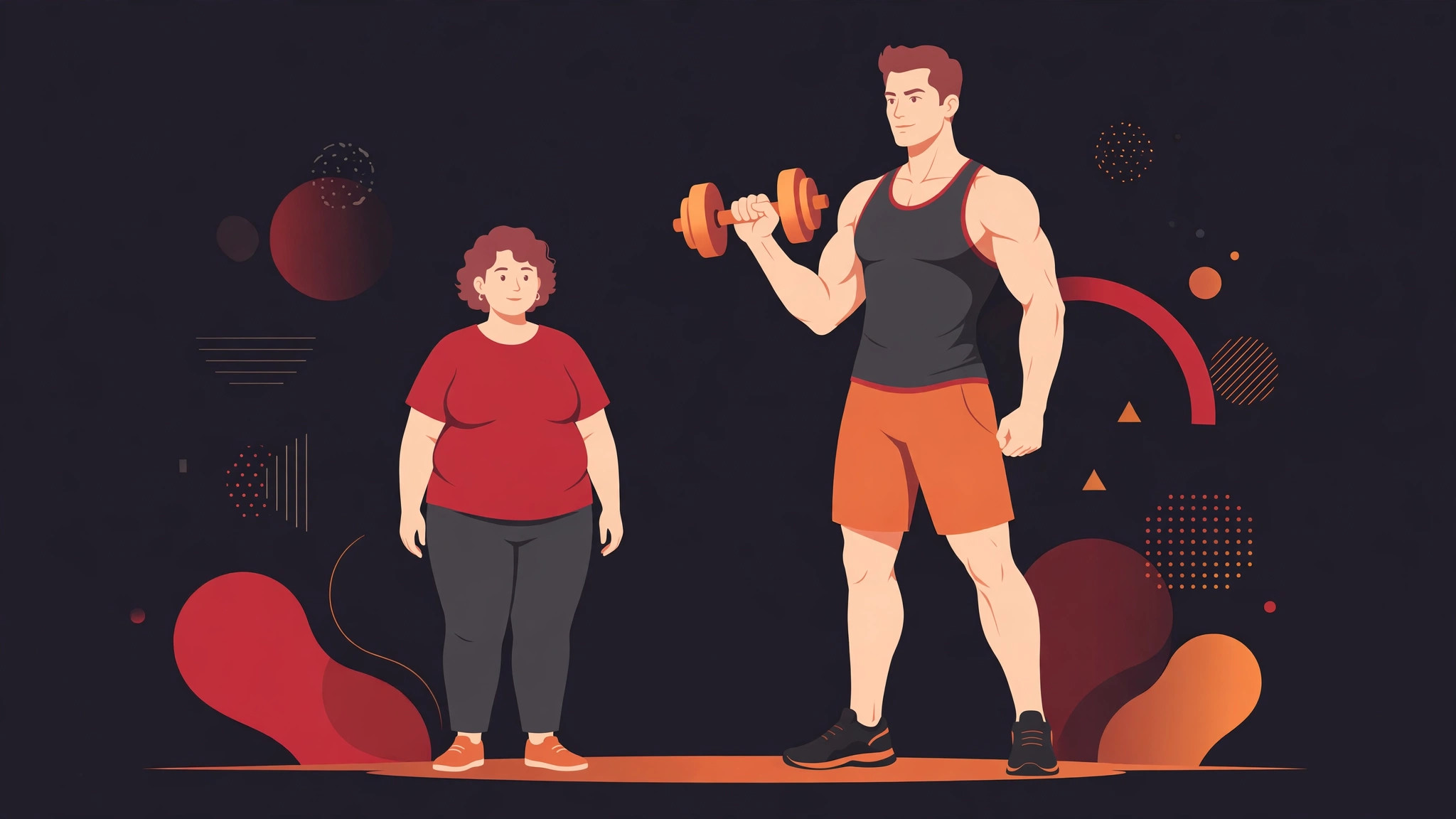
Two different projects
Lose weight quickly and roughly a quarter of what leaves can be muscle, water and glycogen rather than fat. That lighter body is smaller but not necessarily leaner, and it defends a lower metabolic rate. Fat loss with muscle kept is a different project with different tools: a moderate deficit, high protein, and resistance training that gives the body a reason to keep its muscle while the fat stores pay the energy bill. The composition of loss follows the size of the deficit. Crash diets maximise the muscle share of every kilogram lost, because the body cannot mobilise fat fast enough to cover an enormous gap. Moderate deficits keep fat as the overwhelming source. This is the deep reason slow loss wins: not patience as a virtue, but physiology as a constraint on how fast fat alone can leave.
Recomposition: the slow third option
Beginners, returners and people carrying more fat can sometimes gain muscle and lose fat simultaneously at maintenance calories, a process called recomposition. It is slower than a dedicated cut or bulk and the scale barely moves, which is why people abandon it while it is working. The scoreboard is the tape measure, photos and gym numbers: waist falling, lifts rising, weight steady is recomposition succeeding in plain sight. Training is the instruction that protects muscle. A calorie deficit tells the body to find energy; resistance training tells it where not to find it. Dieters who lift keep dramatically more lean mass than dieters who only walk or rest, at identical weight loss. If you do one thing beyond the deficit, make it two or three weekly sessions of progressive resistance work.
Measure what you actually want
If fat is the target, track fat signals: waist circumference, the Navy tape body fat estimate, and how clothes fit, reviewed monthly. Keep protein high using the fat loss range, train with progressive overload, and let the scale be one voice among several rather than the judge. Our body fat calculator turns three tape measurements into the number that matches your actual goal. Set the project name correctly at the start and the metrics follow. If the goal is fat loss, judge by waist, tape estimates, photos and strength held. If the goal were merely weight, any crash would do and the rebound would be scheduled with it. Bodies keep what they are asked to keep; ask for the muscle.