Building a Weekly Training Plan That Survives Real Life
Start from your real calendar
The best plan is the one your week can hold in a bad week, not a perfect one. Count the sessions you can protect, honestly, then build. Two to four strength sessions and two to three cardio sessions cover nearly every goal for non athletes. Frequency per muscle of twice weekly suits strength and muscle goals; endurance goals need one long session that grows slowly and several shorter ones around it. Write the plan in pencil and review it like a coach. Every month, ask which sessions actually happened, which were moved, and which quietly died. The pattern of failures is diagnostic: the 6 am session that never survives is not a discipline problem, it is a scheduling error with a known fix. Plans improve by listening to their own attendance record.
Arrange hard things apart
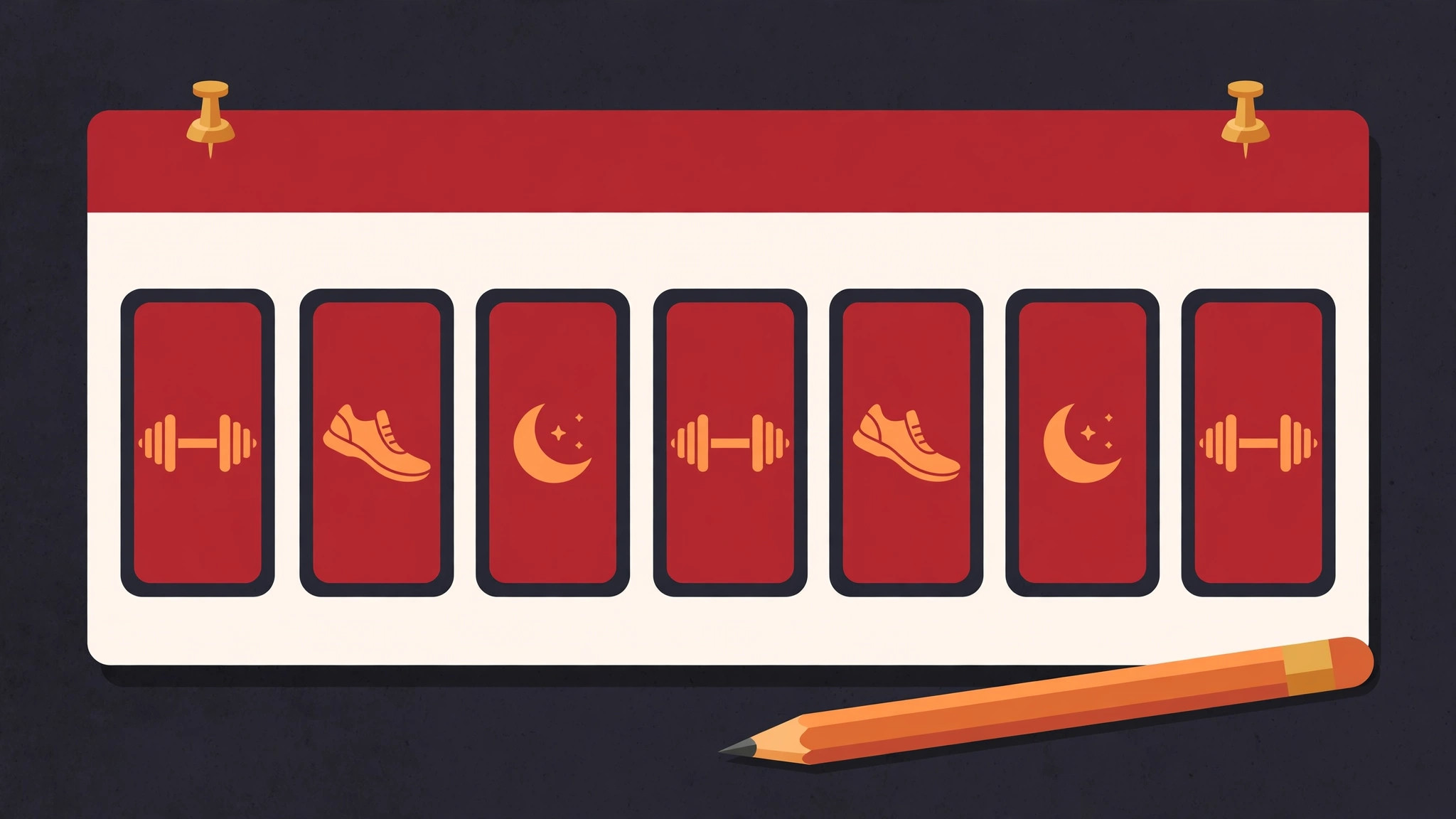
Hard sessions compete for the same recovery. Put the hardest strength day and the hardest cardio day at opposite ends of the week, and keep at least one genuinely easy or rest day after each. Training the same quality twice in a row, heavy legs then hill repeats, produces two mediocre sessions. Many people thrive on a simple rhythm: strength, easy cardio, strength, rest, strength or long cardio, easy, rest. Anchor sessions to existing habits rather than empty hours. Training after work on the commute route, running while children are at their clubs, lifting in the lunch hour near the office: attached sessions inherit the reliability of the anchor. A plan that requires a special trip at a special time will be renegotiated daily, and daily negotiations are where plans go to die.
Let energy needs follow the plan
Training weeks cost more than rest weeks, and appetite notices before spreadsheets do. Your TDEE activity factor should reflect the whole week you actually live, work included, not just gym hours. Recheck it when the plan changes. The weekly plan is a living document: review it monthly, keep what survived contact with real life, and redesign only the parts that kept failing. Leave one slot deliberately unplanned. Life will fill it with the session that got displaced, and if life behaves, it becomes bonus easy work or genuine rest. A plan with no slack is a plan that converts every disruption into failure. Slack is not softness; it is engineering tolerance, and it is why some plans are still alive in year two.