BMR Explained: The Calories You Burn Doing Nothing
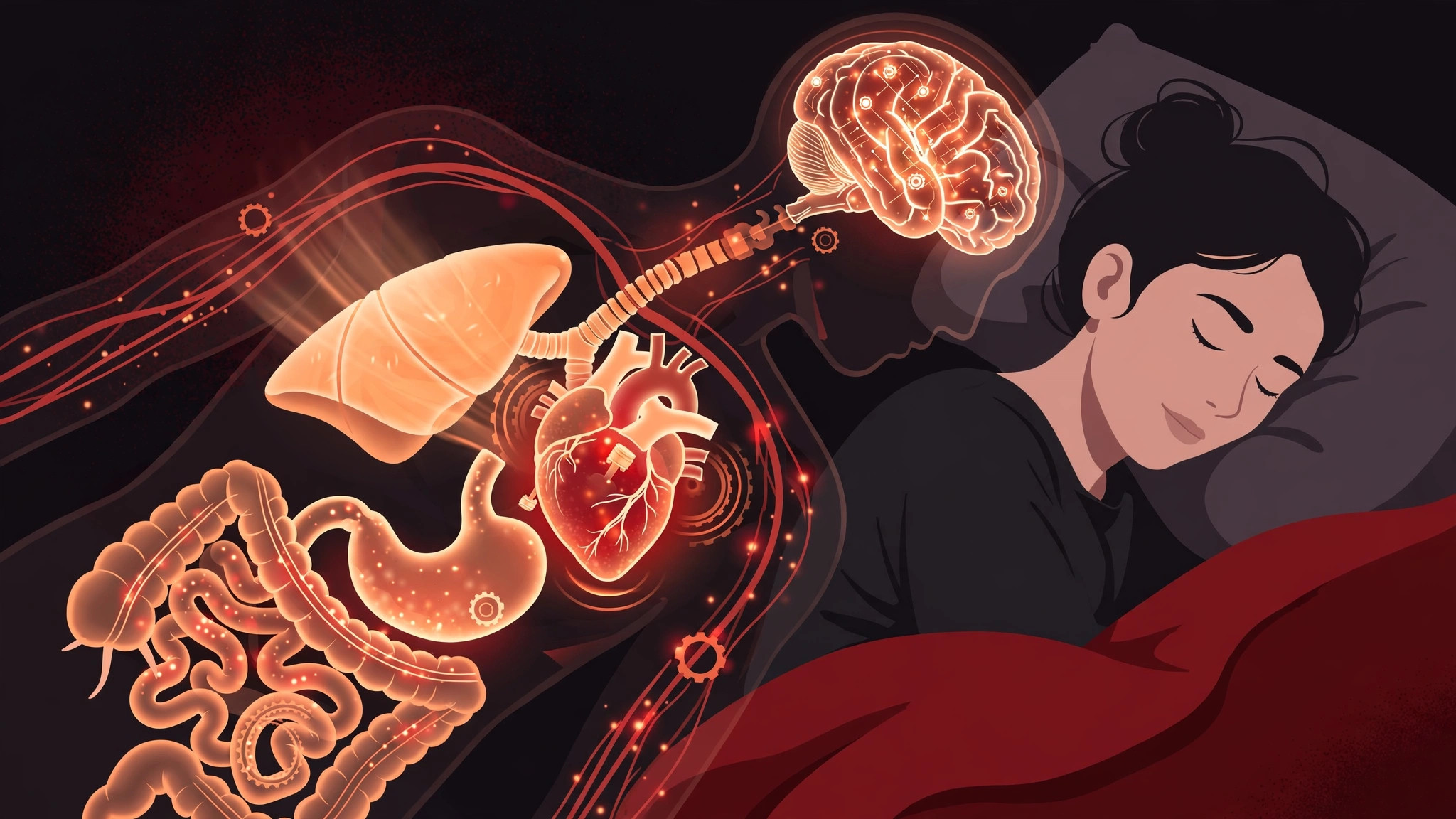
The cost of being alive
Even in a coma, your body would spend most of your BMR. The brain alone takes about a fifth of it, and the liver, kidneys and heart are expensive organs to run. Muscle at rest, digestion excluded, temperature control and constant cell repair make up the rest. For most adults this quiet background burn is 60 to 70 percent of everything they spend in a day, which is why it anchors every calorie calculation worth trusting. The equation used here, Mifflin St Jeor, was published in 1990 from measurements on 498 adults and has repeatedly beaten older formulas in validation studies, landing within 10 percent of measured BMR for most non obese adults. It asks only for sex, age, weight and height, which is why clinics and calculators alike default to it. Where it struggles is at the extremes of body composition it cannot see.
What raises it and what lowers it
Size is the biggest factor: bigger bodies have more tissue to maintain. Muscle mass matters too, though less dramatically than gym folklore claims; a kilogram of muscle burns roughly 13 kcal a day at rest against about 4.5 for fat. Age trims BMR slowly, largely through muscle loss, which is one reason strength training is such valuable insurance. Long severe dieting suppresses it beyond what weight loss alone predicts, a defence called adaptive thermogenesis. Fever, thyroid status and some medications move BMR in ways no equation captures, which is one reason unexplained weight change deserves a medical conversation rather than a recalculated diet. Caffeine and nicotine nudge it briefly upward; chronic under eating pushes it down. Treat the figure as the centre of your personal range and let your weight trend locate you inside it.
Why dieters should care
Eating below your BMR for long stretches is rarely wise: it is the level below which the body starts economising on repair, hormones and warmth. Sensible deficits are taken from TDEE, your full daily spend, not from BMR. Knowing the floor also explains plateaus. As you lose weight, both BMR and TDEE fall, so a fixed intake that once produced loss can quietly become maintenance. There is also a quieter use for BMR: respect. Knowing that your body spends perhaps 1,700 kcal a day before you lift a finger reframes food from enemy to supply line. Diets built with that respect, fuelled adequately and cut modestly from the top, are the ones still standing when the crash diets have been abandoned and forgotten.